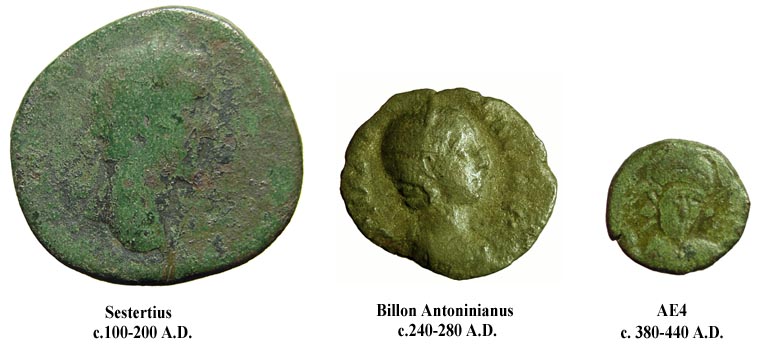
The new age is born from this shift in the money supply. The public begrudgingly had no choice but to use the low-value coins being pumped out of the mints. However, because these same coins could not be redeemed in precious metal for what face value stated, inflation became rampant. As the mints helplessly tried to cope by working overtime, even the traditional silver washes became too expensive and were dropped entirely. Eventually copper itself became a scarce commodity and, as a last resort, the size of the bronze coins diminished from the familiar AE2's to AE3's and finally to AE4's as little as pencil erasers.
With this information, we can usually tell what period a coin belongs to even when its details have been obliterated.